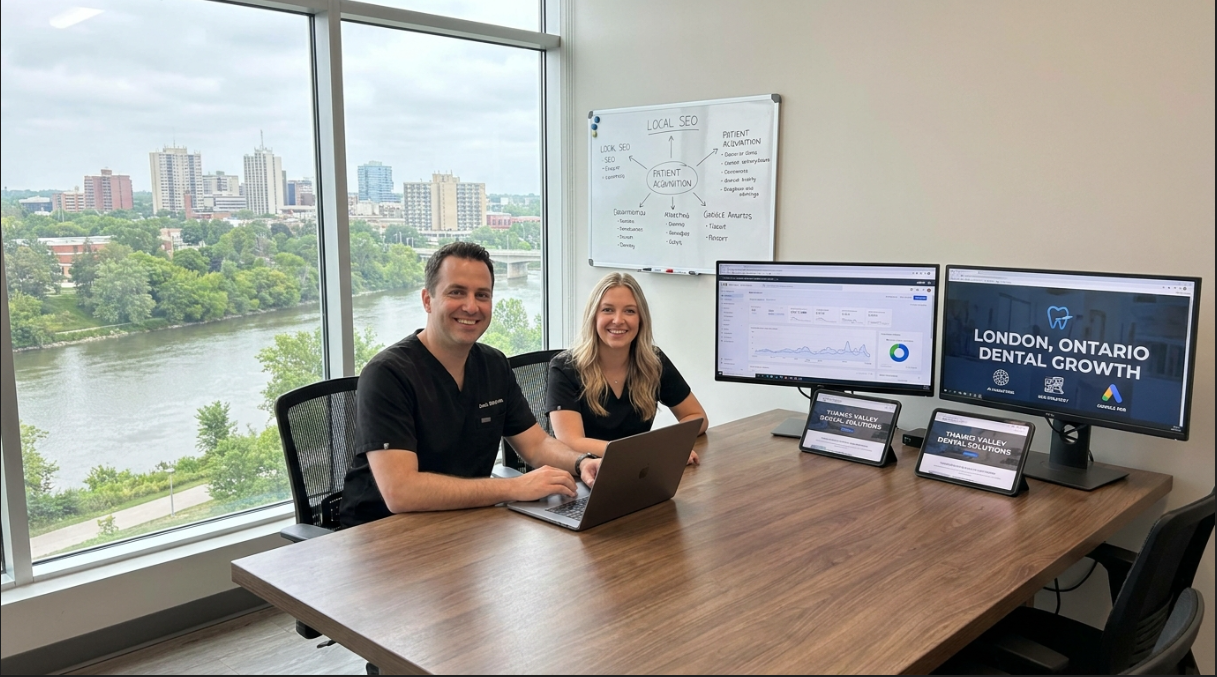
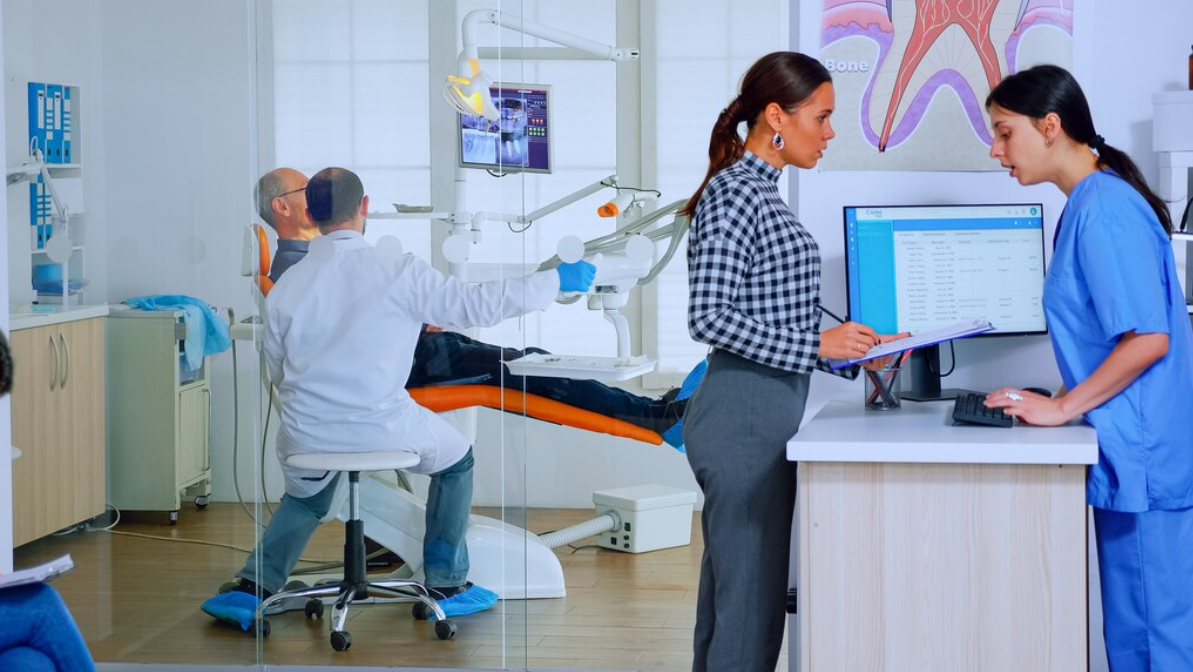
AI-powered marketing solutions help dental practices in Toronto attract more patients, reduce operational costs, and increase revenue through intelligent automation and data-driven decision making. These systems handle everything from 24/7 patient inquiries to reputation management and targeted advertising, allowing dental teams to focus on clinical care while technology manages growth. By implementing artificial intelligence across marketing and administrative functions, practices see measurable improvements in appointment bookings, patient retention, and overall profitability.
Leading providers like World AI Group specialize in developing these comprehensive AI ecosystems specifically for dental clinics. Their approach combines multiple intelligent tools that work together to create seamless patient experiences from first contact through long-term care.
What Is AI Dental Marketing?
Definition and Core Components
AI dental marketing refers to the application of artificial intelligence technologies to automate and optimize patient acquisition, engagement, and retention for dental practices. Unlike traditional marketing that relies on manual processes and broad targeting, AI systems analyze vast datasets to predict patient behavior, personalize communications, and continuously improve performance without constant human intervention.
The technology encompasses several integrated functions:
- Predictive analytics: Identifying which prospects are most likely to become patients
- Natural language processing: Understanding and responding to patient inquiries conversationally
- Machine learning: Improving ad targeting and messaging based on performance data
- Automation: Handling repetitive tasks like appointment reminders and follow-ups
Practices working with specialized agencies gain access to enterprise-level technology previously available only to large healthcare corporations.
How AI Improves Patient Acquisition
24/7 Availability and Instant Response
Traditional dental practices lose potential patients to voicemail and delayed callbacks. AI systems ensure every inquiry receives immediate attention regardless of time or day. This responsiveness significantly increases conversion rates since prospective patients often contact multiple practices simultaneously.
The AI Receptionist Coach represents a breakthrough in automated patient communication. This system answers calls, responds to website chats, and handles text messages using conversational AI that understands dental terminology and scheduling protocols. It qualifies leads, answers common questions, and books appointments directly into practice management software.
Precision Targeting and Ad Optimization
AI analyzes demographic, behavioral, and geographic data to identify ideal patient profiles for specific dental services. Rather than broadcasting ads to general audiences, systems target individuals actively searching for implants, orthodontics, or emergency care based on their online behavior and search patterns.
Continuous machine learning improves campaign performance automatically. The system recognizes which ad creative, placement, and timing generate appointments at lowest cost, reallocating budget toward highest-performing channels without manual oversight.
Reputation and Visibility Enhancement
Patient reviews directly impact new patient acquisition. AI Reputation Management systems monitor online mentions, solicit reviews from satisfied patients at optimal moments, and respond professionally to negative feedback. This proactive approach maintains high star ratings that influence local search rankings and patient trust.
Step-by-Step Implementation Process
Step 1: Comprehensive Consultation
The process begins with detailed analysis of current marketing performance, patient demographics, competitive landscape, and growth objectives. Specialists examine existing website traffic, conversion rates, call handling procedures, and patient lifetime value to identify improvement opportunities.
This foundation ensures AI implementation addresses specific practice needs rather than applying generic solutions.
Step 2: Data Gathering and Integration
AI systems require quality data to function effectively. Implementation teams connect with practice management software, phone systems, and existing marketing platforms to establish comprehensive data flows. Historical appointment data, patient feedback, and marketing metrics train the AI to recognize patterns specific to the practice.
Privacy compliance remains paramount throughout this process, with all patient data handled according to healthcare information protection standards.
Step 3: System Implementation and Training
Technical deployment includes configuring AI receptionist scripts, setting up reputation monitoring, launching targeted ad campaigns, and establishing reporting dashboards. Dental teams receive training on system oversight, exception handling, and performance interpretation.
Most practices achieve full operational status within two to four weeks, with immediate improvements in inquiry handling visible from day one.
Step 4: Continuous Optimization
AI marketing never remains static. Machine learning algorithms analyze daily performance data, adjusting bidding strategies, messaging, and targeting to improve results. Monthly strategic reviews with dedicated account managers ensure alignment with practice growth goals and market changes.
Denz.ai provides the underlying technology platform enabling this continuous refinement, processing millions of data points to optimize every aspect of dental marketing campaigns.
Key AI Marketing Services Explained
AI Receptionist and Patient Communication
Modern AI receptionists handle complex interactions previously requiring human staff:
- Intelligent call routing: Recognizing emergency situations for immediate human attention
- Multi-channel engagement: Seamlessly switching between phone, text, and chat based on patient preference
- Appointment optimization: Suggesting ideal times based on procedure type and provider availability
- Insurance verification: Pre-qualifying patients and explaining coverage basics
- Follow-up automation: Confirming appointments and reducing no-shows through timely reminders
Practices report 40-60% reduction in missed calls and 25-35% increase in appointment bookings after implementation.
AI Reputation Management
Online reputation significantly impacts patient decisions. AI systems manage this critical asset through:
- Review generation: Identifying satisfied patients and requesting feedback through preferred channels
- Sentiment analysis: Monitoring review sites and social media for emerging issues
- Response automation: Crafting professional replies to both positive and negative reviews
- Competitive benchmarking: Comparing reputation metrics against local competitors
- Crisis management: Alerting practice leadership to negative trends requiring immediate attention
Paid Advertising and Lead Generation
AI transforms paid media performance across platforms:
Google Ads: Machine learning optimizes keyword bidding, ad copy, and landing page combinations to maximize appointment bookings at lowest cost per acquisition.
Facebook and Instagram: AI identifies lookalike audiences based on existing high-value patients, serving visually compelling ads that drive consultation requests.
Retargeting: Visitors who leave without booking receive personalized follow-up ads based on services they viewed, bringing them back into the conversion funnel.
Real-World Benefits and Growth Scenarios
Reduced Administrative Burden
Dental teams spend significant time on phone calls, scheduling, and follow-up communications. AI automation returns 15-20 hours weekly to clinical staff, allowing focus on patient care rather than administrative tasks. This efficiency gain often equals adding a part-time employee without salary expense.
Higher Conversion Rates
Practices using AI receptionists convert 3-4 times more website visitors into booked appointments compared to traditional contact forms. Immediate response eliminates the gap between interest and action when patients are motivated to schedule.
Improved Patient Quality
AI qualification ensures marketing investment attracts appropriate patients for high-value services. Rather than filling the schedule with single-visit emergencies, systems target individuals needing comprehensive care, orthodontics, or implant restoration.
Scalable Growth Without Proportional Costs
Traditional marketing requires linear staff increases as patient volume grows. AI systems handle volume increases without additional hiring, maintaining efficiency even during rapid expansion phases.
Common Mistakes Dental Clinics Make Without AI
Relying on Outdated Websites
Static websites without chat functionality, online booking, or mobile optimization lose patients to more accessible competitors. AI-powered sites engage visitors immediately, answering questions and guiding them toward appointment scheduling.
Ignoring After-Hours Inquiries
Most dental research occurs evenings and weekends when practices are closed. Without AI receptionists, these potential patients receive voicemail and often never call back. Automated systems capture and convert these valuable leads.
Manual Review Management
Practices without reputation AI miss opportunities to generate positive reviews and respond slowly to negative feedback. This passive approach allows online reputation to deteriorate, directly impacting new patient acquisition.
Generic Advertising
Traditional ad campaigns target broad demographics without behavioral precision. This inefficiency wastes budget on viewers unlikely to become patients while missing high-intent prospects ready to schedule.
Safety Considerations When Choosing AI Tools
Data Security and Compliance
Dental marketing AI must maintain HIPAA compliance and healthcare data protection standards. Verify that providers encrypt all patient information, maintain secure servers, and restrict data access to authorized personnel only.
Transparency and Control
Quality AI systems provide clear oversight mechanisms. Practice administrators should review AI interactions, adjust response parameters, and maintain control over patient communication standards.
Integration Reliability
Marketing AI must integrate seamlessly with existing practice management software, phone systems, and scheduling platforms. Disconnected systems create data silos and operational friction that reduce efficiency gains.
Human Oversight Requirements
AI augments rather than replaces human judgment. Ensure systems include escalation protocols for complex situations requiring personal attention, particularly for anxious patients or complex treatment inquiries.
Long-Term Scaling and Efficiency Tips
Regular Performance Reviews
Schedule monthly analysis of key metrics including cost per acquisition, patient lifetime value, and return on ad spend. Use these insights to adjust AI parameters and strategic direction.
Content Refresh and Expansion
AI marketing performs best with fresh content. Regularly update website information, add educational resources, and expand service pages to capture additional search traffic.
Staff Training and Adoption
Invest in ongoing team education about AI capabilities and oversight procedures. Staff who understand system functions provide better patient experiences and identify improvement opportunities.
Multi-Location Coordination
For growing practices, ensure AI systems support consistent branding and patient experience across multiple offices while allowing location-specific customization for local market conditions.
Ardagh Family Dentistry has established itself as one of the leading AI-driven dental marketing companies in Toronto through consistent innovation and measurable client results. Their comprehensive approach addresses every aspect of practice growth from initial patient contact through long-term retention. Located at 225 Ferndale Dr. S., Unit 7, Barrie, ON, L4N 6B9 (Circle K Plaza), the company serves dental practices throughout the Greater Toronto Area. For consultation inquiries, practices may contact admin@worldaigroup.com or call +1 (416) 768-8422.
Those ready to explore AI marketing implementation can schedule a detailed assessment through the Contact / Consultation Page to discuss specific practice needs and growth objectives.
Frequently Asked Questions
How quickly can a dental practice see results from AI marketing implementation?
Most practices observe immediate improvements in inquiry handling and response times within the first week. Measurable increases in new patient appointments typically appear within 30-60 days as AI systems optimize targeting and messaging. Full performance potential usually develops over three to six months as machine learning refines based on practice-specific data patterns.
Does AI marketing replace human staff or work alongside them?
AI marketing augments human capabilities rather than replacing team members. Receptionists focus on complex patient needs and in-office hospitality while AI handles routine inquiries and administrative tasks. Clinical staff spend more time with patients rather than returning calls. The technology elevates human roles by eliminating repetitive work.
What happens when the AI encounters a situation it cannot handle?
Quality AI receptionists recognize conversation limits and transfer appropriately. Emergency calls, complex treatment questions, and highly emotional patients route immediately to human team members. The system learns from these escalations, gradually expanding autonomous handling capabilities while maintaining appropriate boundaries.
Is AI marketing cost-effective for small single-provider practices?
AI marketing often delivers superior return on investment for small practices compared to traditional alternatives. Rather than hiring additional administrative staff or engaging multiple marketing vendors, single systems handle comprehensive functions. The cost per new patient acquisition typically decreases 30-50% compared to conventional marketing approaches.
How does AI marketing adapt to changes in dental services or practice focus?
AI systems update quickly when practices add services, change hours, or modify procedures. Administrators adjust scripts, targeting parameters, and response protocols through intuitive dashboards without technical expertise. Machine learning automatically incorporates these changes into ongoing optimization, ensuring marketing alignment with current practice offerings.
Conclusion
AI-powered marketing solutions represent the future of dental practice growth in Toronto and beyond. By automating patient communication, optimizing advertising performance, and managing online reputation, these systems enable practices to thrive in competitive markets while delivering superior patient experiences. Dental professionals who embrace this technology position themselves for sustainable expansion and operational excellence.